ARСA presented its experience in preserving Romani oral history at a symposium in Yale
On April 12, Yale University hosted a symposium that brought together researchers, activists, and artists working on topics related to Romani history, culture, human rights, and memory. One of the key sections focused on the genocide of Roma and the preservation of oral history.
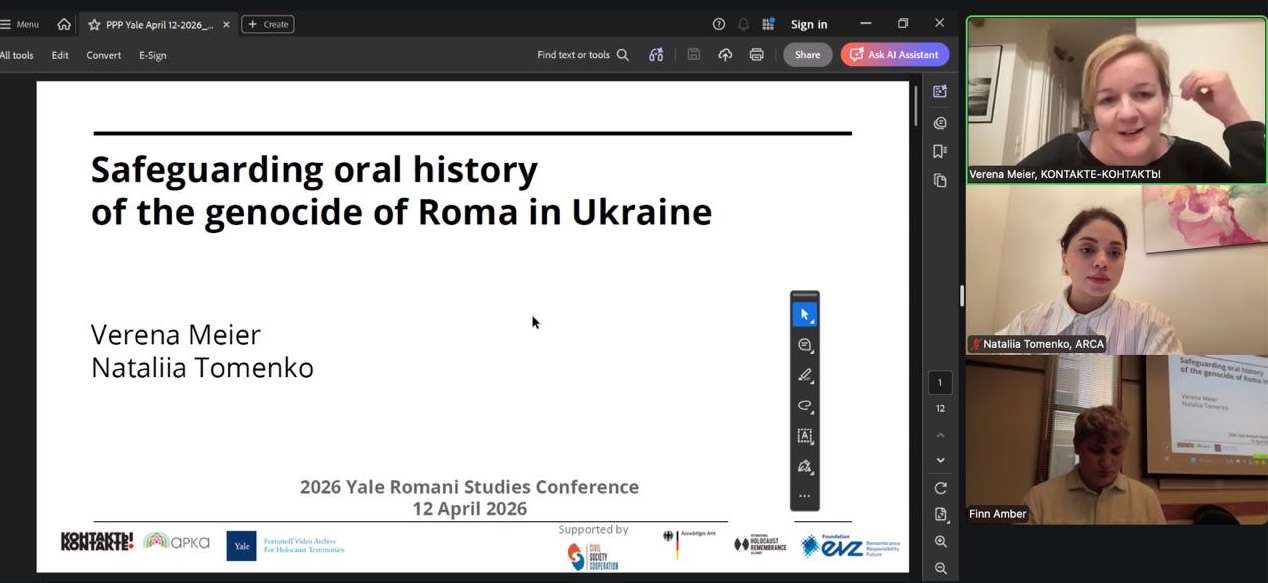
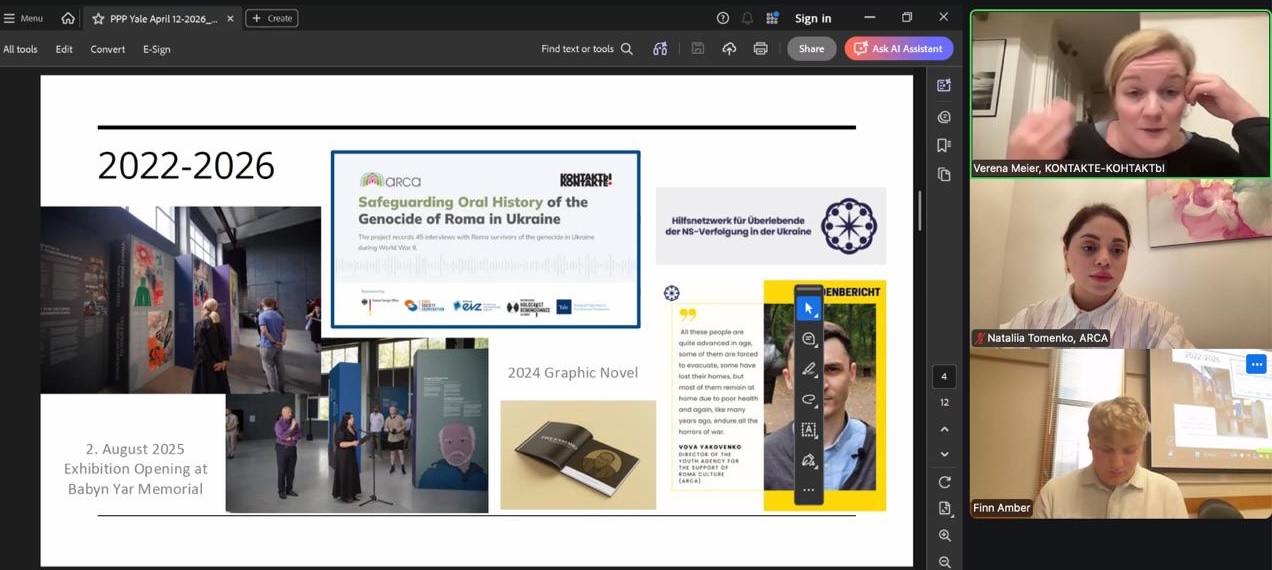
As part of the “Holocaust” panel, Nataliia Tomenko and Verena Meier presented the talk “Safeguarding Oral History of the Genocide of Roma in Ukraine History.” Their presentation focused on preserving oral testimonies about the genocide of Roma in Ukraine during the Second World War.
For ARCA, this topic has been an important area of work for several years. For decades, the genocide of Roma remained underresearched and was often silenced — both in public discourse and in official historical narratives. That is why today it is especially important not only to restore historical justice, but also to document and preserve the memory of these crimes.
Oral history plays a special role in this process. Witness testimonies, family stories, and personal experiences help us understand the tragedy not only through numbers and archival documents, but through human lives. At the same time, with each passing year, there are fewer living witnesses, which means there is also less time left to record these stories.
“It is very important for us to speak about the genocide of Roma at international academic platforms like this. It is an opportunity not only to share the experience of the Romani community in Ukraine, but also to return this history to the international memory discourse of the Second World War. Oral testimonies help preserve the human dimension of the tragedy — something that cannot be conveyed through archival documents alone,” said Nataliia Tomenko.
ARCA values the opportunity to discuss these topics within international academic spaces. Events like this help expand the geography of our work, build new partnerships, and bring the history of Roma in Ukraine to wider audiences. It is also encouraging to see growing academic interest in the genocide of Roma and the preservation of oral history — meaning these stories are becoming less marginalized within public memory.
See also
- АРКА представила Україну на міжнародній платформі Café Kyiv 2026
- АРКА візьме участь у Cafe Kyiv 2026
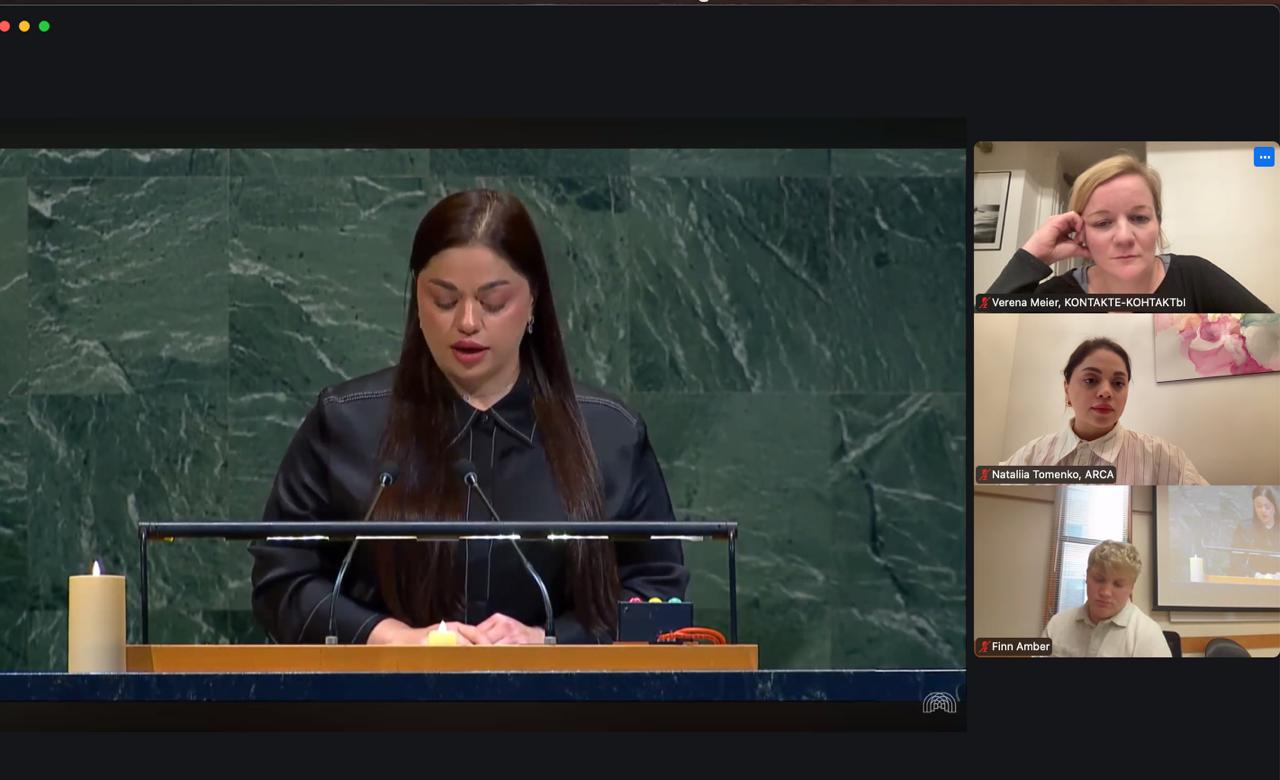
- Roma Women’s Testimony from Ukraine at the United Nations Holocaust Memorial Ceremony
- Roma rights and the challenges of war: results of a discussion in Berlin
- Roma Inclusion in Focus – Strengthening Partnerships Between Ukraine and Germany
- The film “Named Voices” was presented at an international conference
- ARСA representative participates in OSCE conference on human rights
- Babyn Yar: And the Thousands of Ravines of Memory. How We Reflect on the Past During Wartime
- Voices of Memory and Future: ARCA’s Participation in the 5-Year Anniversary of the Program
- ARCA Representatives Hold Lecture at the MFA to Mark Roma Genocide Remembrance Day
- Roma Programme Featured at One of Europe’s Largest Conferences
- In New York City, the 69th session of the UN Commission on the Status of Women is underway
- A screening of a movie about the Roma Genocide took place in Berlin
- Michael Roth: “Roma are the largest ethnic community. And its contribution should be recognized”
- Humanitarian Aid, Human Rights, Equality: Challenges faced by the Roma Community
- Participation in the panel discussion “Challenges Faced by Ukrainian Roma in the Ukraine”
- Attitude towards minorities is an important indicator of Ukraine's readiness to accede to the EU
- A networking meeting between civil society participants
- We are already planning the restoration of Ukraine: an international conference has begun
- Participation in DEZIM CONFERENCE 2024
- The Art of Memory: How the Romani Tragedy Resurrects from Oblivion
- The Forum dedicated to the 140th Anniversary of the Female Movement in Ukraine
- "Romanis must be included in the processes of Ukraine’s Reconstruction", – Volodymyr Yakovenko
- The event "Roma contribution to the Recovery of Ukraine"
- The Council of Europe Dialogue with Roma and Traveler civil society
- Conference on Ukraine's recovery in Berlin
- Educational event "Roma in Ukraine - fighters for democracy, human rights and justice" was held
- Ukrainian Decolonization: the Untold Roma Stories
- Public event "Roma in Ukraine – Fighters for Democracy, Human Rights and Justice"
- Mapping the Challenges faced by Ukrainian Roma in a War Time and Overcoming the Obstacles
- Cafe Kyiv event took place in Berlin
- Respect, Recognition and Rights of National Minorities in Ukraine
- Consultation meeting on opportunities for Roma youth realization
- Meeting with a member of the Bundestag
- Conference “Roma as an integral part of Ukrainian society”
- Forum of Roma civil society
- "The Russian War Against Ukraine and Its Consequences for Roma" conference
- First day of Roma Civil Society Forum
- The Sastipe project
- The project Through my mind
- DIKH HE NA BISTER - Roma Genocide Remembrance Initiative